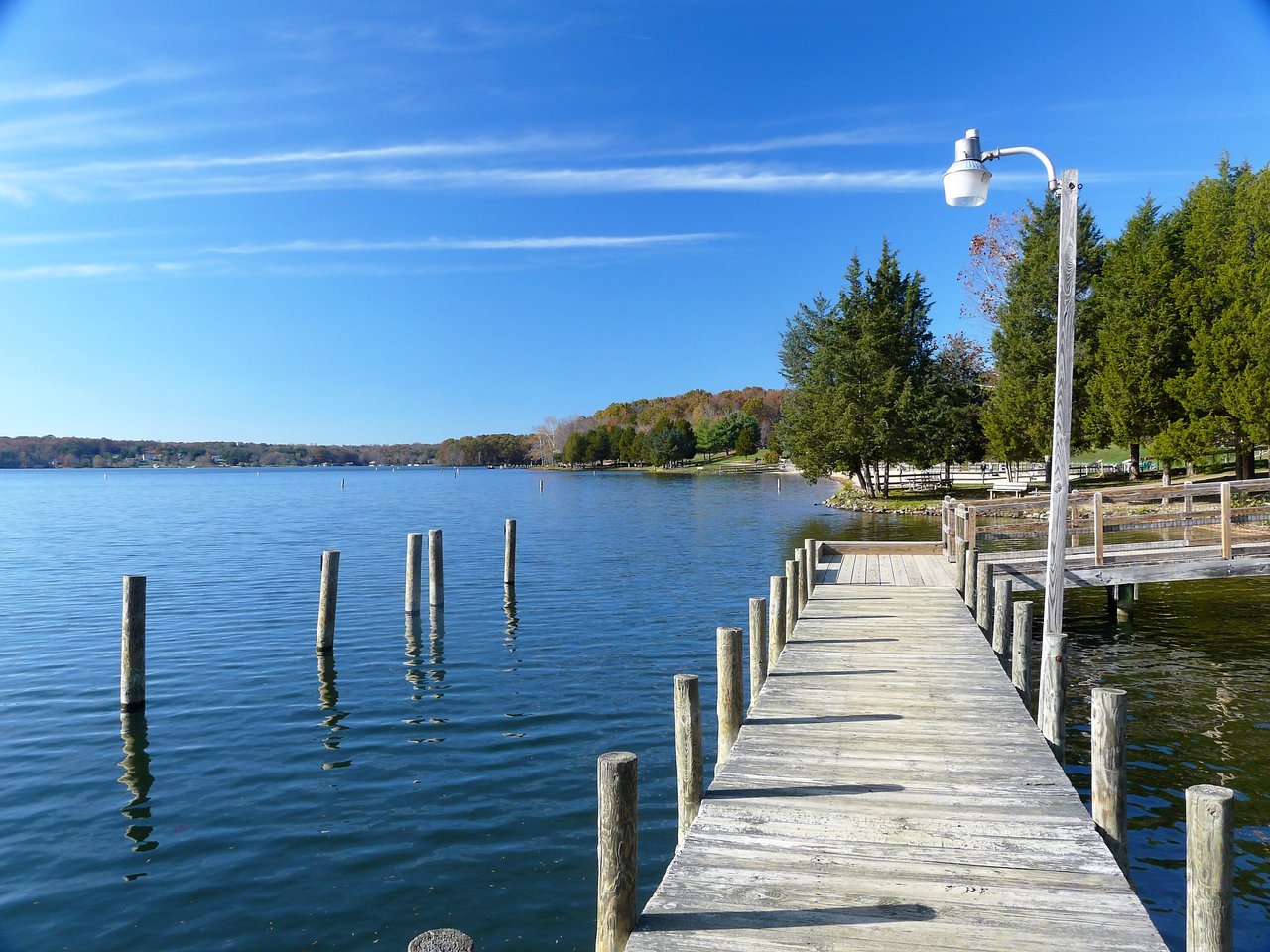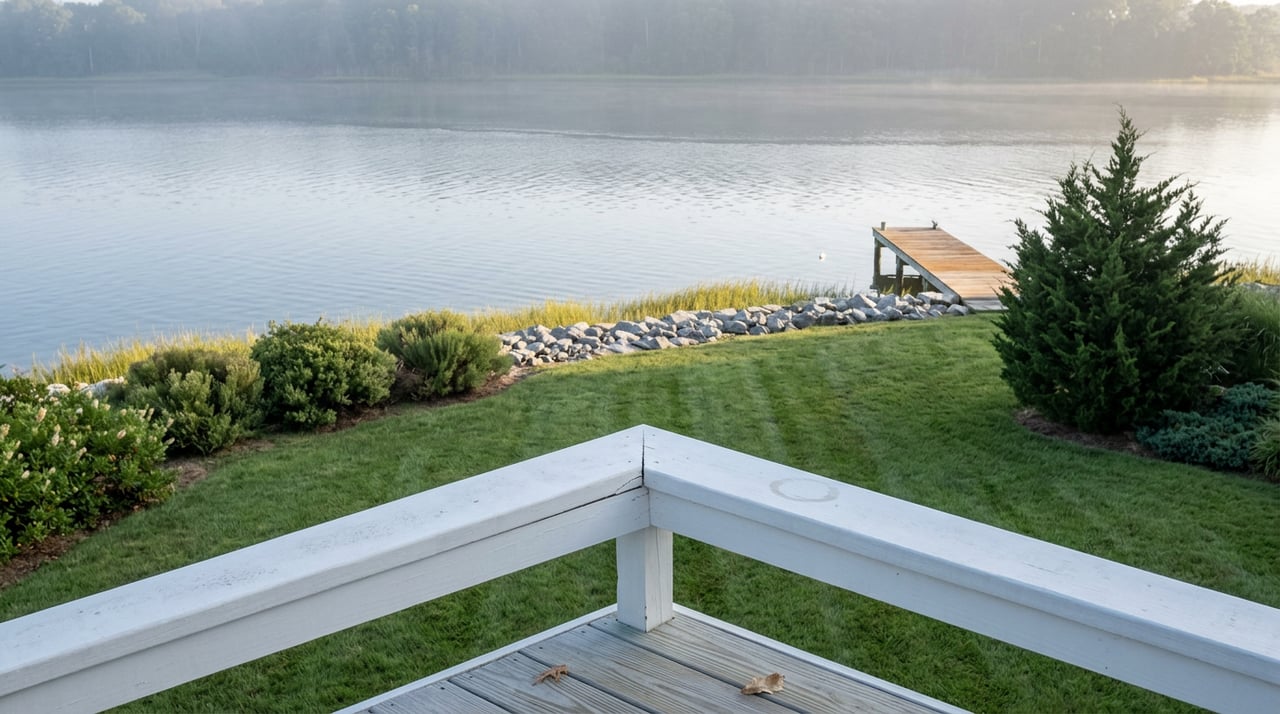
Pull up two active listings in Reedville's waterfront market this month and you'll find one at $319,900 and one at $1,275,000. Both are waterfront. Both are single-family homes. Neither is a fixer-upper being flipped against a mansion. The gap isn't quality. It's geography, and more specifically, it's which water you're on.
Reedville gets sold as a single idea: a quiet fishing village at the end of Route 360 where the harbor still works and the sunsets are free. That's true, but it flattens two very different products into one listing category. There's waterfront in the bayside subdivisions built for retirement and second homes, and there's waterfront tied to Cockrell Creek, where a 150-year-old industry still runs boats, nets, and a processing plant a few hundred yards from people's back doors. A buyer who doesn't know the difference ends up comparing price per square foot across two markets that don't actually compete with each other.
The Creek That Built the Town
Reedville's waterfront identity starts on Cockrell Creek, where a menhaden processing operation has run continuously since 1878. Today that plant belongs to Omega Protein, which processes the fish that its contracted fleet, Ocean Harvesters, catches in purse seine nets across the Chesapeake Bay and the Atlantic. It's not a relic. Omega Protein moved its corporate headquarters from Houston to Reedville and put $1.3 million into restoring a 1930s building on the property to house it, a move the company's CEO framed as a long-term commitment to staying put. The plant is Northumberland County's largest private employer, with roughly 260 people on payroll.
Northumberland County's own 2026 draft comprehensive plan treats this stretch differently than the rest of Reedville. It designates the Cockrell's Creek shoreline as a working waterfront, a mixed business-residential zone meant to keep marinas, boatbuilding, and aquaculture viable there, while the surrounding village is planned as primarily residential. That's a zoning distinction with a real effect on what a buyer experiences day to day: boat traffic, net-mending, the seasonal rhythm of a working fleet, and yes, some smell when the wind sits still. None of that shows up in a listing photo.
Same Search Page, Different Product
The listing portals already sort Reedville into named pockets, even if buyers skim past the labels. Search "waterfront" here and you'll land on separate pages for Chesapeake Beach, Folly, and the general Reedville pool, each pulling from different streets and a different price story.
| Search bucket | Price range found in it (August 2026) | What explains the spread |
|---|---|---|
| Chesapeake Beach waterfront | $750,000 to $895,000 | Three comparable three-bedroom homes on Twin Harbor Road, Great Wicomico Light Lane, and Fleeton Point Circle, all open-water or river frontage removed from harbor traffic |
| Folly waterfront | $319,900 to $1,275,000 | Same search page holding a two-bedroom cottage in neighboring Burgess and a four-bedroom home with a pool on Swann Court |
| All Reedville waterfront, zip 22539 | Median $499,000 across 43 active listings | Blends the bucket above into one number |
That last row is the one worth sitting with. In the same month, Movoto listed the median price for all Reedville home listings, waterfront or not, at $520,000. The waterfront-only median of $499,000 sits below that. If waterfront were a uniform premium, you'd expect the opposite. Instead, the waterfront category is stretched between a $319,900 cottage and a $1.275 million home with a pool, and the median lands almost exactly where the town's overall housing stock sits. The number isn't wrong. It's just not telling you which product you're looking at.
Land tells a similar story from a different angle. Across the wider Reedville area, waterfront lots have averaged $375,842 in listing price, or roughly $94,789 per acre, a figure spanning everything from a modest creek-adjacent parcel to open Bay acreage. Averages compress the range the same way medians do.
What the Catch Cap Has to Do With Your Closing
Buyers drawn to the working-harbor side of Reedville should understand that the industry shaping that character is in an active regulatory stretch, not a settled one. In late 2025, the Atlantic States Marine Fisheries Commission voted to cut the East Coast menhaden catch limit by 20 percent starting in 2026, bringing the coastwide cap to 186,840 metric tons, while leaving the Chesapeake Bay's own cap at 51,000 metric tons for Ocean Harvesters. That Bay-specific number is now back on the table. In August 2026, the same commission advanced a draft addendum that could lower the Bay cap further and add in-season quota periods meant to let more menhaden migrate north before the fleet catches them, a proposal now headed to public comment.
The push behind that addendum comes partly from something you can watch from a dock: osprey. William & Mary researcher Bryan Watts has tracked a 20 to 30 percent drop in the number of Chesapeake ospreys laying eggs in recent years, and researchers use the bird as a proxy for menhaden abundance because the fish make up a large share of an osprey's diet.
"They come here, they arrive at the normal time, and they'll sit there on the nest all season."
Virginia's 2026-28 budget set aside $2 million, backed by an amendment from Governor Spanberger, to fund the first Chesapeake Bay-specific menhaden population study, led by the Virginia Institute of Marine Science in partnership with the Virginia Marine Resources Commission. That study is meant to finally answer whether the Bay cap needs to move, and by how much. None of this determines what happens to the plant or the fleet. It does mean a buyer weighing a home near Cockrell Creek is buying into a working industry whose regulatory footing is being actively renegotiated this year, not a fixed backdrop.
Reading a Reedville Listing Like You Know the Difference
Before comparing two "waterfront" listings on price alone, it helps to ask a short list of questions that the price and photos won't answer on their own.
- Which body of water is this actually on? Cockrell Creek, the Great Wicomico River, and the open Chesapeake Bay each carry different boat traffic, different views, and different proximity to the working harbor.
- Is the listing inside a named bayside subdivision like Chesapeake Beach or Folly, or is it closer to the village core near the creek?
- What's the wind exposure relative to the plant, and have you visited at a time of day when you'd actually notice it?
- Does the property come with deeded water access, a private pier, or a boat lift, the kind of detail that separates a "waterfront" listing that touches the shoreline from one that merely faces it?
Frequently Asked Questions
Does every home near the harbor smell like the plant? No. Wind direction, distance, and the time of year all affect it, and many homes even a short distance from Cockrell Creek rarely notice it. It's worth a visit at different times of day before ruling a property in or out.
Is the menhaden plant going away? There's no indication of that. The company relocated its headquarters to Reedville and invested in the property, and the current regulatory activity is about catch limits and research, not the plant's existence.
Are homes in Chesapeake Beach or Folly part of an HOA? That varies by street and by listing, so it's a question to confirm on any specific property rather than assume based on the subdivision name.
Is the working harbor a bad thing for property values? Not inherently. It's part of what gives Reedville its character and its history, and plenty of buyers choose it deliberately. The point is knowing which product you're buying so the price makes sense to you later, whether you're comparing it to a neighbor's sale or explaining it to the next buyer.
If you're weighing a home on the open Bay against one closer to the village and the creek, that's exactly the kind of comparison worth talking through before you start touring. Josh Hinson grew up on the Northern Neck and works this stretch of waterfront regularly. Schedule a free consultation and bring your list of streets, we'll go through what each one actually gets you.